



Post Date : Friday, May 29, 2026
Ho Chi Minh City’s rental housing market is facing a serious shortage of supply and remains largely underdeveloped.

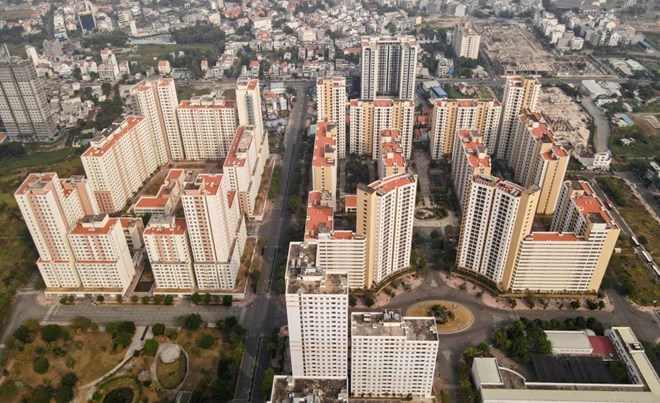
Renting a home as a long-term housing solution is expected to become a new trend in modern urban living. Photo: Anh Tú
Incentives Needed for Businesses to Invest in Rental Housing
According to the Ho Chi Minh City Institute for Development Studies, among the total demand for social housing in the city, lease-to-own demand accounts for 68.1%, purchasing demand represents 26%, while pure rental demand makes up only 5.9%.
The long-term rental segment mainly serves salaried workers such as civil servants, office employees, factory workers, and military personnel, accounting for 82% of demand. Students represent 14% of the demand, mostly through socialized dormitories and mini apartments. This means that approximately 96% of people with stable incomes are financially capable of paying rent if rental prices are reasonably controlled.
Dr. Nguyễn Duy Phương, Investment Director at DG Capital, stated that unlike commercial housing projects, which can recover capital quickly, rental housing projects typically require 15–20 years for capital recovery and are highly sensitive to interest rates. Currently, businesses still face commercial lending rates of 10–14% per year, creating significant financial pressure and reducing profitability.
Therefore, if authorities want businesses to participate more actively in this segment, long-term credit packages with low and stable interest rates are essential due to the long capital recovery cycle of rental housing projects. In addition, tax incentives such as reductions in land-use tax and corporate income tax should be offered to projects committed to long-term affordable rentals.
Special Preferential Policies Are Necessary
Mr. Lê Hoàng Châu, Chairman of the Ho Chi Minh City Real Estate Association (HoREA), believes the issue mainly lies in housing size regulations and urban planning mindset.
According to him, current regulations require social housing units to have a minimum size of 25 square meters. However, for single workers and low-income laborers, renting a 25-square-meter apartment remains financially burdensome. International standards suggest that housing costs should not exceed 20–25% of income. In Vietnam, rental costs are already approaching the 25% threshold, making them relatively expensive. When 25-square-meter units are beyond tenants’ affordability, developers face slow capital recovery and financial strain. Meanwhile, many workers continue to live in private boarding houses of only 15–20 square meters.
He suggested that Vietnam needs stronger institutional reforms, such as allowing businesses to develop rental social housing in the form of smaller rental rooms with more flexible minimum-area regulations.
Sharing the same view, Dr. Nguyễn Duy Phương proposed that the government should implement a dedicated strategy, including reserving land for affordable rental housing development, providing tax and credit incentives to investors, and building rental housing near metro lines, industrial parks, and employment centers. In addition, long-term lease contracts should be standardized to help tenants feel stable and secure, rather than having the mentality of “temporary living.”
Regarding profitability, the current 10% profit cap for social housing projects is still not attractive enough for investors.
In terms of land resources, after administrative restructuring, Ho Chi Minh City now possesses a significant amount of public housing assets and land, which should be utilized effectively for policy-oriented housing development.
The city could also establish a shared resettlement housing fund and allow flexible conversion between resettlement housing, public-service housing, social housing, and urban renovation housing without requiring lengthy procedures for changing project functions.
Beyond building new social housing, authorities should also maximize existing resources and diversify housing models, including purchasing, lease-to-own, and rental options for all eligible groups.
“When the State controls land resources and project approvals, state-owned enterprises can implement projects much more efficiently. On the contrary, if everything continues to rely solely on private developers, administrative procedures will remain extremely complicated and time-consuming,” Dr. Phương emphasized.
Source: Gia Miêu