

Post Date : Wednesday, May 27, 2026
After several market cycles, investors have become more selective. Rather than seeking short-lived hotspots, capital is gradually shifting toward locations capable of emerging as new growth hubs. In these areas, infrastructure does more than improve connectivity—it reshapes urban space, attracts population growth, stimulates commercial activity, and supports sustainable long-term capital inflows.
Not all infrastructure projects create a strong appreciation cycle. While individual transport routes primarily reduce travel time and improve accessibility, the combination of TOD (Transit-Oriented Development), Metro systems, and Ring Roads represents an entirely different development framework.
This is not merely transportation infrastructure; it is a strategic growth corridor capable of expanding urban development boundaries, creating new urban centers, and redefining the growth trajectory of an entire region.
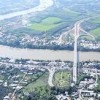
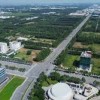
Expanding Regional Infrastructure Is Driving Real Estate Value Along Key Connectivity Corridors. Photo: The Aspira
Metro systems improve transportation connectivity, but Transit-Oriented Development (TOD) is what truly drives urban formation. When metro lines, ring roads, and strategic infrastructure projects operate in a synchronized manner, the value created extends far beyond improved mobility. It leads to the emergence of an entirely new urban structure where populations relocate, commercial activities flourish, and integrated living ecosystems begin to take shape.
The greatest advantage of TOD-benefiting areas lies in their scarcity. Not every location possesses the conditions necessary to develop an urban environment centered around public transportation. As a result, properties located within TOD cores often enjoy greater growth potential. Their value is derived not only from infrastructure itself but also from the beginning of a new development cycle.
Capital flows tend to move ahead of urban planning, and large-scale investment capital often gravitates toward areas where a new growth trajectory is just beginning to emerge.
The market previously witnessed a remarkable growth cycle in District 9 between 2015 and 2021, driven by the simultaneous development of Metro Line 1, the expansion of Hanoi Highway, and the establishment of the Ho Chi Minh City High-Tech Park. Once considered a suburban area, District 9 quickly transformed into a major growth hub in the eastern region, attracting residents, infrastructure investment, and substantial capital inflows.
According to CBRE Vietnam, many projects located along the metro corridor experienced price increases ranging from 1.5 to 3 times as infrastructure development progressed.
Notably, the strongest appreciation often occurs during the early stages of a growth cycle, when the market's pricing framework has not yet been fully established. This is also the period when investment capital typically moves in ahead of the market to capture the opportunities presented by the next wave of growth.
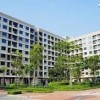
Apartment prices continue to rise, yet some projects in Eastern Ho Chi Minh City still offer relatively affordable opportunities for young buyers. Photo: The Aspira
At present, many experts believe that Di An possesses development conditions similar to those that District 9 enjoyed in the past. The area not only benefits directly from the Suoi Tien–Tan Van Metro extension and Ho Chi Minh City’s Ring Road 3, but also occupies a strategic position connecting to Thu Duc City, the emerging growth center of the eastern region.
As property prices in Thu Duc City gradually establish a higher benchmark, the room for future appreciation is no longer as significant as it was during the early stages of development. Meanwhile, Di An continues to maintain a much more accessible price level despite benefiting from the same strategic infrastructure network. This pricing gap reflects more than just a difference in market values—it highlights two distinct stages of urban development: one area has already entered its value-establishment phase, while the other is still in the process of emerging as a new growth hub.
As investors increasingly prioritize assets backed by existing infrastructure, practical usability, and secure financial policies, projects located within TOD cores are becoming major market attractions.
Among them, The Aspira stands out as a notable development. Situated at the gateway connecting Thu Duc City and Di An, the project is located within an 18.8-hectare TOD core area, offering direct access to Metro Line 1 (Ben Thanh – Suoi Tien), the future Suoi Tien – Tan Van Metro extension, and the strategic Ring Road 3 network of Ho Chi Minh City.
In addition, The Aspira has achieved the internationally recognized EDGE Green Building Certification, awarded by the International Finance Corporation (IFC). This sustainability standard is increasingly valued by young homebuyers and end-users who prioritize environmentally responsible and sustainable living.
Representatives of The Aspira’s Sales and Marketing Management Unit have announced a range of financial support programs designed to make homeownership more accessible.
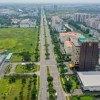
Photo: The Aspira
In addition to benefiting from strategic infrastructure developments, The Aspira has further strengthened its appeal through financial policies specifically designed to optimize cash flow management. The project currently offers interest rate support for up to 36 months, a principal repayment grace period of up to 6 years, and a special rental guarantee program of up to VND 96 million over 12 months. These incentives allow buyers to plan their long-term finances more effectively while reducing cash flow pressure during the initial ownership period.
Notably, customers can now access units through a non-loan payment plan, with estimated monthly payments starting from approximately VND 6.8 million per month, a level considered highly competitive compared to neighboring areas around Thu Duc City.
In addition, the project’s “Triple Value Booking Privilege” program, available from a booking amount of only VND 25 million, provides further advantages for both owner-occupiers and medium- to long-term investors seeking assets that offer practical usability, stable cash flow, and long-term growth potential.
According to industry experts, in the market’s new recovery cycle, projects that combine existing infrastructure advantages, strong end-user demand, and flexible financing policies are likely to maintain sustainable attractiveness and competitive strength over the long term.
Source: Ánh Dương