

Post Date : Thursday, November 14, 2024
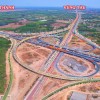
Apart from Ho Chi Minh City, neighboring provinces such as Long An, Dong Nai, and Ba Ria-Vung Tau are also expected to see growth of at least 10-15% in the short term. These areas are benefiting from key infrastructure connectivity projects, such as the Ben Luc-Long Thanh Expressway, Ring Roads 3 and 4, and the strong development of industrial zones and satellite towns. These infrastructure projects not only enhance regional connectivity but also boost investment attractiveness, making the real estate market in areas surrounding Ho Chi Minh City more dynamic and with significant growth potential.
In Long An, four urban projects have been approved and are planned for comprehensive implementation before the second quarter of 2025. This is expected to bring about a new wave of development for the real estate market in Ho Chi Minh City and the entire southern region. Long An plays the role of a gateway linking Ho Chi Minh City with the Mekong Delta region, helping to form a connected development chain and create conditions for significant capital inflows. Infrastructure in Long An has received coordinated investment, including transportation connectivity systems, industrial zones, and new urban areas, which offer strong appeal to investors and genuine homebuyers.
Moreover, due to reasonable land prices and long-term development potential, urban projects in Long An are attracting considerable attention from investors. These projects not only provide a high-quality living environment, with modern amenities and green spaces, but also help increase the future value of real estate. The advantages in infrastructure and urban planning have already created differentiation, helping Long An attract both individual investors and large enterprises while solidifying its role as a key urban development center in the region.
Since the beginning of 2024, Ho Chi Minh City has also witnessed robust growth across different market segments, from high-end apartments to mid-range units. According to Tran Khanh Quang, apartments priced between 2-3 billion VND remain a suitable choice for buyers with residential needs, while detached houses priced between 6-8 billion VND are also favored by buyers. These segments not only fit the financial capabilities of most homebuyers but also meet practical usage needs. Particularly, apartments that have been handed over and have red books are seeing an increase in transactions, indicating that housing demand remains high amid increasingly scarce land resources.
Expert Tran Khanh Quang also emphasized the importance of updating the regulatory framework related to real estate. He noted that the issuance of the new land price table will lead to higher compensation prices, which will pose considerable challenges for small and medium enterprises, while expanding opportunities for large investors. This may lead to a reduction in the diversity of developers in the real estate market, as the high cost of compensating land makes it difficult for smaller enterprises to participate in new projects. Consequently, the market will lean towards large groups with strong financial capacity that are able to withstand the challenges posed by cost changes.
Additionally, the cost of converting agricultural land to residential land has also increased significantly, posing an additional burden for investors. Previously, this conversion cost around 200-300 million VND, but now this figure has risen to 1-2 billion VND, equivalent to the cost of purchasing new land. This makes investment in land more expensive, requiring investors to have clearer and longer-term financial plans. Furthermore, costs associated with legal procedures and administrative paperwork have also increased the financial burden on individual investors and small and medium enterprises, thereby raising the challenges of participating in the market.
Tran Khanh Quang predicts that land prices in Ho Chi Minh City will continue to rise in the near future, particularly as new legal regulations become increasingly stringent. The supply of real estate is expected to become more and more limited, and only investors with strong financial capacity will be able to maintain and expand their operations. In the next six months, the land segment is expected to rise by 15-20%, while growth in neighboring provinces is projected to be at least 10-15%. This indicates the significant growth potential of the real estate market in Ho Chi Minh City and its surrounding areas, creating substantial opportunities for investors who can seize the moment and adapt to policy changes.
In the current context, the real estate market in Ho Chi Minh City and its neighboring provinces is not only facing challenges regarding limited supply and rising costs but also presents many breakthrough opportunities if they are seized in a timely manner. Large investors, with their financial strength and risk management capabilities, will have advantages in developing large-scale projects and leveraging land scarcity to enhance value. Conversely, small investors need to find ways to optimize costs, take advantage of niche opportunities in the market, and develop long-term strategies to continue to exist and grow.
Understanding and adapting to market changes and regulatory adjustments will be key factors for investor success. The real estate market is entering a phase in which regulatory frameworks play an essential role in shaping development trends, and only those who are well-prepared, able to seize opportunities, and manage risks effectively will succeed in the current volatile environment.