

Post Date : Monday, August 04, 2025
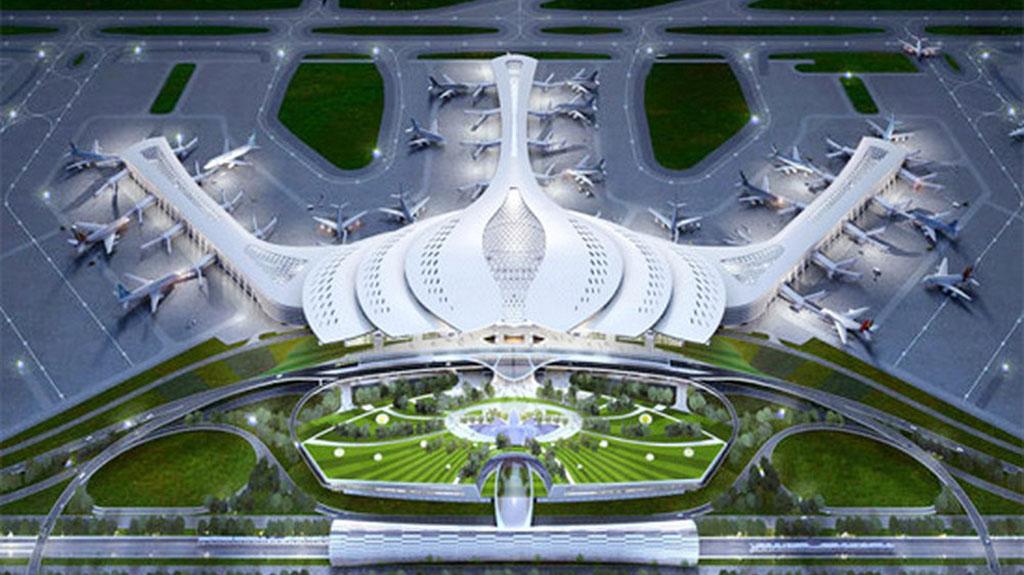
After nearly a decade of planning and overcoming countless challenges, Long Thành International Airport—Vietnam’s largest and most ambitious aviation project—is now entering a rapid development phase. More than just a national transportation project, the airport is poised to become a powerful engine for economic growth and a major catalyst for the real estate market across Southern Vietnam.

At the end of July, the Vietnam Air Traffic Management Corporation (VATM), in cooperation with relevant authorities, successfully conducted the first test flights at Long Thành using the specialized King Air 350ER aircraft to calibrate runway lighting systems, instrument landing systems (ILS), and other navigation and surveillance equipment.
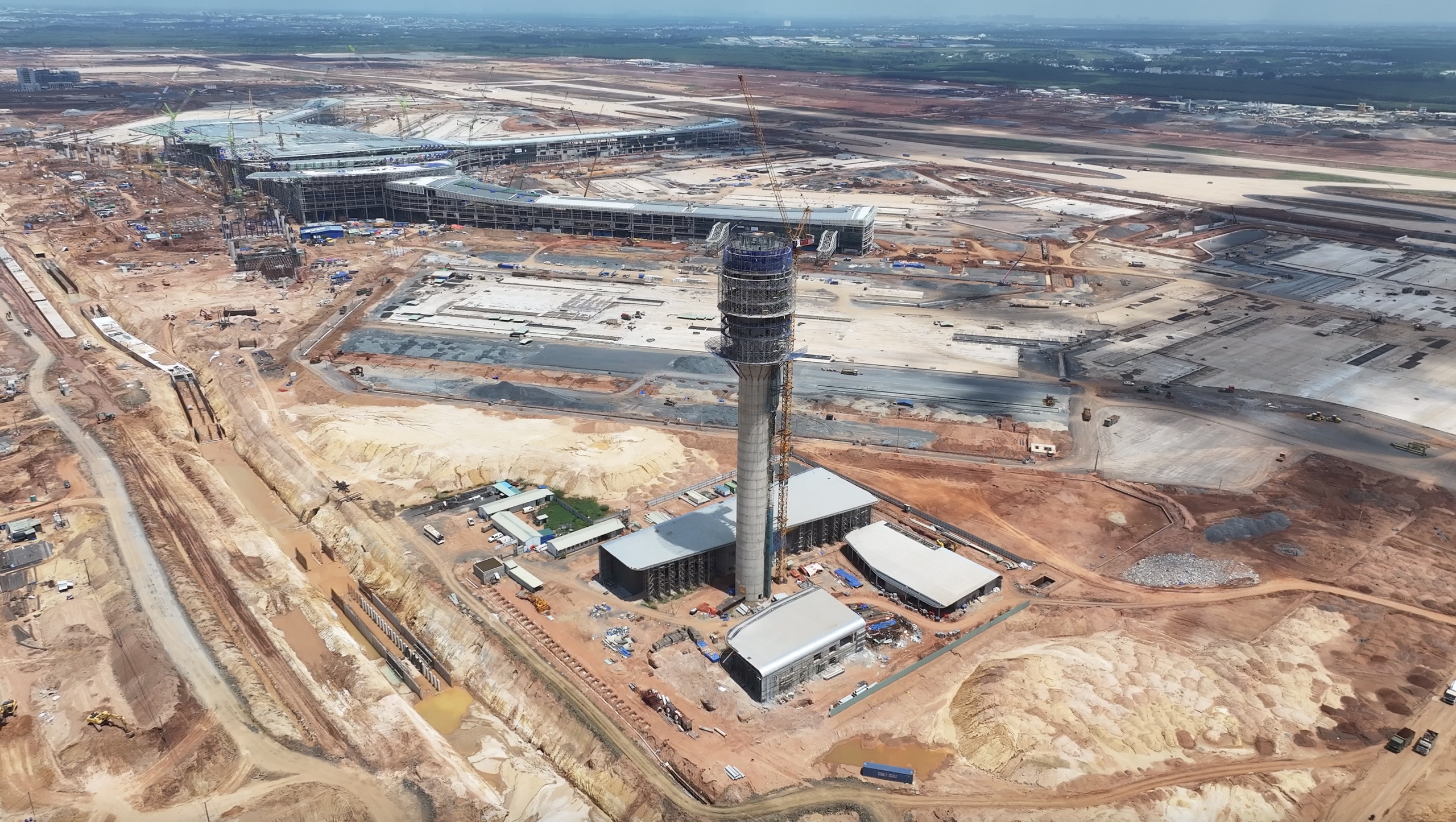
According to the Airports Corporation of Vietnam (ACV), the roof structure of the main terminal has been completed, over 12,000 m² of glass has been installed, and major systems—baggage handling, jet bridges, electricity, and fire protection—are all progressing rapidly. The goal is clear: commercial operations will begin in early 2026.
More than 13,000 engineers, workers, and 3,000 pieces of machinery are working day and night to ensure timely delivery.A Regional Infrastructure Backbone in the Making
Complementing airport construction are major transport arteries—T1 and T2 access roads—which are now open and expected to be officially completed in August. Meanwhile, local governments have fast-tracked upgrades to existing major roads (25B and 25C), connecting Long Thành with Ho Chi Minh City, Biên Hòa, and the wider Southeast region, ensuring seamless integration of airport logistics and urban mobility.

Long Thành is Vietnam’s first airport to adopt the “Airport City” model—an internationally recognized strategy that transforms airports into integrated hubs of commerce, logistics, and urban development. Surrounding the airport, the government plans to establish:
A commercial, financial, and event zone (~1,700 hectares)
Logistics and high-tech industrial zones (~7,100 hectares)
International education and research institutions (~100 hectares)
Tourism, leisure, and luxury resort districts (~1,800 hectares)
This ecosystem is expected to generate strong demand for housing, office space, hospitality, and warehouse facilities—fueling long-term real estate growth across the region.
Recent market data supports this outlook: since late 2023, land prices near Long Thành Airport (e.g., Bình Sơn, Lộc An, Phước Thái) have increased by 10–15%. Meanwhile, demand for logistics and industrial real estate has also surged, with foreign investors actively scouting for development sites.
Under Vietnam’s Master Plan for Airport Development (2021–2030, vision to 2050), the country aims to develop two major international aviation hubs: Hanoi (Nội Bài) and Ho Chi Minh City (Long Thành and Tân Sơn Nhất), achieving ICAO’s 4F standard, comparable to regional giants like Singapore’s Changi or Kuala Lumpur’s KLIA.
Beyond Long Thành, several airport projects are gaining momentum:
Gia Bình International Airport (Bắc Ninh) – A key symbol for APEC 2027 with a capacity of 15 million passengers/year by 2050
Phú Quốc International Airport (An Giang) – Targeting expansion to 50 million passengers/year
Chu Lai Airport (Central Vietnam) – Designed as a regional logistics and cargo hub
Long before the first flight, leading Vietnamese developers such as Vinhomes, Novaland, Nam Long, and Đất Xanh have quietly acquired land in Nhơn Trạch, Long Thành, and surrounding districts to capitalize on future demand for residential communities, logistics parks, and commercial centers.
Experts believe Long Thành’s activation will:
Drive population growth and create high-end residential clusters
Boost rental yields and property values
Attract foreign manufacturing and tech firms
Spark demand for logistics, cold storage, and data center facilities
Long Thành is not just an airport—it’s a symbol of Vietnam’s infrastructure revolution. As its airport economic zone takes shape, real estate value will shift from mere landholding to strategic asset appreciation. Those who position themselves early stand to benefit most from Vietnam’s aviation-driven development wave.