




: Era Town, Nguyen Luong Bang,Phu My Ward, District 7, Ho Chi Minh City
028 66843500
+886 956918888
hotline
028 66843500 +886 956918888

No need for a single-status certificate when buying or selling real estate or vehicles.

Post Date : Friday, October 17, 2025

A Bold Step Toward Administrative and Digital Reform

Vietnam’s Ministry of Public Security has recently drafted a Resolution proposing the removal of notarization and single-status certificates in property and vehicle transactions for cases where data has already been digitized and verified.

Under this proposal, citizens who buy, sell, transfer, mortgage, or inherit land, or conduct vehicle registration and ownership transfer, will no longer be required to notarize contracts, present single-status certificates, or provide copies of personal documents.

Instead, electronic data from national databases — covering citizens, land, vehicles, and civil status — will be used for identity and ownership verification. This electronic data carries the same legal validity as paper documents.
Transactions can be completed using digital signatures or Level-2 VNeID accounts, which hold the same legal effect as notarized contracts.

The reform’s main goal is to cut administrative time and costs, eliminate redundant paperwork, and promote digital governance and a paperless administration system.

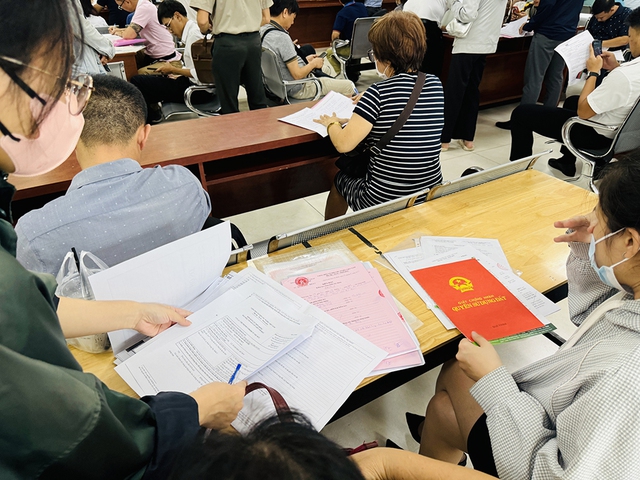
Bỏ xác nhận độc thân khi mua bán nhà đất, xe- Ảnh 1.

Why Single-Status Certificates Are No Longer Necessary?

According to Mr. Lê Hoàng Châu, Chairman of the Ho Chi Minh City Real Estate Association (HoREA), requiring individuals to present a single-status certificate is now redundant, since marital status data is already integrated into the national digital identification system (VNeID).

Within this system, a citizen’s marital status, household registration, property ownership, residential address, and passport information are all interconnected and verifiable. Thus, government agencies can easily check this data online without asking citizens to submit additional certificates.

This change brings several clear benefits:

  • Saves time and reduces administrative costs for citizens;

  • Eases the workload on local civil and notary offices;

  • Enhances data accuracy, transparency, and real-time updates.

Mr. Châu noted:

“When all information can be verified instantly and secured through blockchain technology, the need for notarization and marital status certificates becomes unnecessary.”

Positive Impacts on the Real Estate Market

Legal experts believe this reform will significantly accelerate property transaction processes in Vietnam.

Lawyer Trần Minh Cường (TMC Lawyers) said that most land and property data has already been digitized. With electronic signatures and VNeID verification, transactions that once took days can now be completed in minutes.

This would:

  • Increase market liquidity and transaction speed;

  • Attract more foreign investment due to greater transparency and efficiency;

  • Lower transaction and notarization costs for both individuals and businesses.

If fully implemented, the reform would mark a major leap toward e-government and a digital economy, strengthening Vietnam’s investment environment and global competitiveness.

                      Tiến tới không cần xác nhận độc thân - Tuổi Trẻ Online

Legal Risks Still Require Careful Management

However, lawyer Lê Hằng (Trương Anh Tú Law Firm) cautioned that notarization plays a vital legal role — not merely verifying signatures, but protecting the legality and safety of transactions.

Notaries are responsible for reviewing property ownership, checking for legal disputes, mortgages, or restrictions, and warning parties of potential risks.
If notarization is abolished before electronic databases are fully complete, buyers may lose their ability to verify legal ownership, leading to significant risks such as:

  • Purchasing properties under mortgage, seizure, or litigation;

  • Buying joint marital assets without spousal consent, causing contracts to be voided;

  • Fraudulent signatures, under-declared sale prices, tax evasion, and money laundering.

Lawyer Hằng warned:

“If procedures are simplified too quickly without alternative safeguards, buyers — often the weaker party — may face severe legal risks. Courts could see a surge in property disputes and fraudulent transactions.”

A Phased Roadmap Is Essential

The Ministry of Public Security stated that in cases where data is incomplete or unverified, agencies may still request additional documents or guide citizens to update their VNeID information to qualify for streamlined future transactions.

Experts recommend a three-phase implementation roadmap:

  1. Pilot Phase (2025–2026): Launch in major cities like Hanoi, Ho Chi Minh City, and Da Nang, where digital infrastructure is ready.

  2. Expansion Phase (2027–2028): Integrate nationwide databases for land, marriage, and vehicles.

  3. Stabilization Phase (from 2029): Establish comprehensive legal frameworks and formalize electronic notarization as a national standard.

The removal of notarization and single-status certificates marks a historic step toward Vietnam’s digital and legal modernization.
However, for this reform to succeed, robust data infrastructure and legal safeguards must be in place to protect citizens’ rights and prevent fraud.

Once fully operational, Vietnam could become the first Southeast Asian country to enable fully electronic real estate transactions —
No paper, no notarization, no single-status certificate — just one VNeID for a fast, transparent, and secure property deal.

This reform could open the door to a new era of smart, digital real estate transactions in Vietnam.


Thank you for rating
0 0

Free Consultation Update the latest information
Enter your information to receive our advice
capcha
capcha
News Update the latest information
Ho Chi Minh City Faces a Shortage of Affordable Rental Housing
Dong Nai is making a strong breakthrough, emerging as a new urban hub.
2026 社會住宅「大浪潮」:數萬戶新住宅同步啟動建設
When Infrastructure Meets Incentive Policies: Where Is the New Focus of Capital Flow?
Billion-Dollar Infrastructure Takes Shape, Positioning Dong Nai as a New Investment Hotspot!
Dong Nai Transforms Rapidly as Investors Rush to Capitalize on Infrastructure Growth Opportunities!
More Than $1 Billion Flows into the North of Ring Road 4 – Is a New Growth Hub Taking Shape?
Enhancing Land-Use Efficiency: Ho Chi Minh City Reclaims Project Land in the High-Tech Park
Infrastructure Breakthrough: Direct Connection Between Ho Chi Minh City and Vung Tau via the New Expressway
Vietnam Strengthens Its Position on the APAC Economic Map, Creating Major Opportunities for the Real Estate Market.
Video clip Update the latest information