




RAISING FAMILY TAX DEDUCTION: A BENEFICIAL POLICY BUT STILL INSUFFICIENT
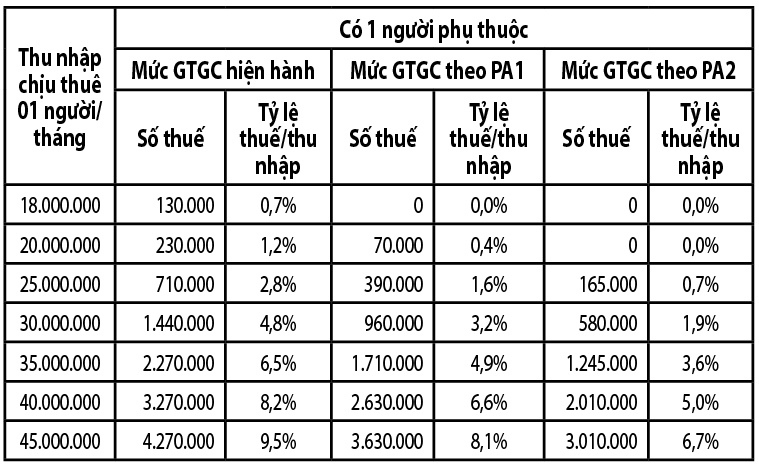
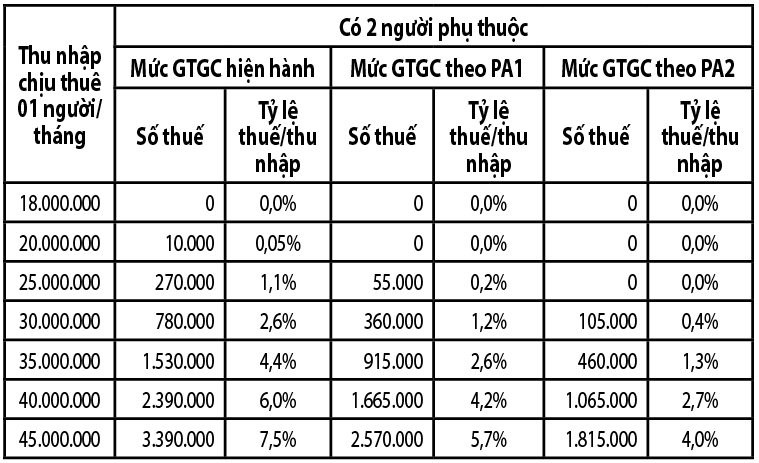
Hanoi – October 21, 2025 – The Standing Committee of the National Assembly has officially approved a resolution to adjust the Personal Income Tax (PIT) family deduction level (Giảm Trừ Gia Cảnh – GTGC).
Accordingly:
-
The deduction for taxpayers increases from 11 million VND/month to 15.5 million VND/month.
-
The deduction for each dependent rises from 4.4 million VND/month to 6.2 million VND/month.
-
The new policy will take effect from the 2026 tax year.
Benefits for salaried workers
With the new GTGC threshold, salaried employees will see a noticeable reduction in their tax obligations. For example, an individual earning 20 million VND/month (without dependents) will now pay only about 120,000 VND/month in PIT after deductions – a very small amount compared to the previous rate.
This adjustment gives workers more disposable income, allowing for better spending, saving, or small-scale investment — an especially important relief amid rising prices and inflation. It also raises the non-taxable income threshold, meaning more low-income earners will be exempt from PIT entirely.
However, concerns remain
Despite the roughly 40.9% increase over current levels, the new GTGC still does not fully match the real cost of living, especially in major cities like Ho Chi Minh City and Hanoi, where essential goods and services have increased by 15-20% or more.
Moreover, since the policy takes effect in 2026, workers will continue to be taxed under the old 2020 standard (11 million/4.4 million VND) throughout 2025 — leading many to describe the news as “welcome, but not yet satisfying.”
Experts have noted that adjusting GTGC according to GDP per capita growth is a positive direction, but using outdated economic baselines (from 2020–2025) risks making the new deduction obsolete soon after implementation. They suggest revising the GTGC annually or regionally, reflecting differences in living costs across provinces.
Economic implications and market analysis
-
Positive for consumption: Higher disposable income boosts consumer spending, which can stimulate demand in retail, services, and small residential real estate markets.
-
Limited short-term impact: For higher-income individuals, the tax savings are modest compared to rapidly rising expenses in housing, education, and healthcare, meaning overall spending behavior may not shift significantly.
-
Business adjustments: Employers may need to review their compensation and year-end bonus schedules to maximize employee benefits. Bonuses paid after January 2026, for example, will be subject to the new, more favorable deduction rates.
Policy recommendations
-
The GTGC should be revised periodically—preferably every year or tied to the inflation index—to ensure tax policy keeps pace with economic realities.
-
Policymakers could consider regional GTGC brackets, as living costs vary sharply between urban and rural areas.
-
For employees, it’s advisable to plan bonus timing to take advantage of the new deduction from early 2026.
-
For analysts and real-estate professionals, tracking disposable income trends will be key to forecasting housing demand and consumer confidence in 2026 and beyond.
Raising the family deduction threshold marks an important step toward easing the tax burden on salaried workers and aligning policy with inflationary realities. Yet, the new figures may still fall short of matching actual living costs in urban centers.
To make this reform truly effective, Vietnam should adopt a more dynamic, region-based, and annually adjustable approach — ensuring that after paying taxes, workers still have enough to spend, save, and invest for a stable and prosperous life.