


Post Date : Tuesday, August 26, 2025
According to the Ho Chi Minh City Department of Transport (Sở GTCC), Vingroup has submitted a preliminary investment proposal for a metro line connecting the city center with Can Gio District. This is set to be one of the largest infrastructure projects in southern Ho Chi Minh City, serving as a major driver for the development of the Can Gio Reclamation Urban Area and surrounding coastal regions.
The proposed metro will span 48.5 km, built entirely on elevated tracks, with a maximum speed of 250 km/h. The line will feature two main stations (Tan Phu Station in District 7 and Can Gio Station), along with two depots: one on a 39-hectare site in Long Hoa Commune, Can Gio, and another on a 20-hectare site in Binh Thuan Ward, District 7. The total investment is estimated at VND 102,370 billion (approx. USD 4.09 billion).
![]()
The metro line is planned as follows:
Starting from Nguyen Van Linh Boulevard (between Nguyen Thi Thap Street and Ly Phuc Man Street).
Running along the median of Nguyen Van Linh, then turning left into Nguyen Luong Bang Boulevard – 15B Street – D1 Street.
Crossing Rach Dia Bridge into the Hong Linh Resettlement Area – Nha Be, then continuing straight along Road No. 11 in the Van Phat Hung Resettlement Area – Nha Be.
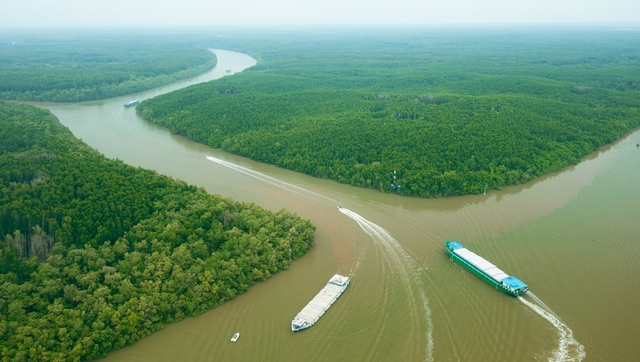
After crossing the Soai Rap River, the line will run parallel to the Ben Luc – Long Thanh Expressway until reaching Rung Sac Road, then turn right and follow Rung Sac Road to its final terminus in central Can Gio.
This metro will directly connect District 7 – Nha Be – Can Gio, greatly reducing current travel times that rely solely on road transport, and forming a strategic transportation corridor in southern Ho Chi Minh City.
The city’s long-term plan is to transform Can Gio into an international eco-marine tourism and leisure city, making the construction of this high-speed metro both necessary and feasible.
The project is expected to significantly boost the real estate market along the route:
District 7: already a high-end residential hub anchored by Phu My Hung, property values are expected to climb further thanks to the direct metro link to Can Gio.
Nha Be: resettlement and new urban areas such as Van Phat Hung and Hong Linh will become key transit hubs, driving up land and housing values.
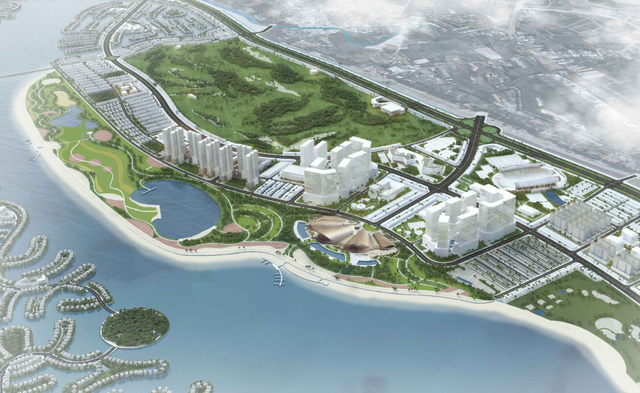
Can Gio: once limited by weak infrastructure, the metro will transform it into Ho Chi Minh City’s “coastal tourism gateway,” enhancing the value of land, resort villas, and the Can Gio Reclamation Urban Area.
In particular, the upcoming Can Gio Reclamation Urban Area will serve as a direct connection point of the metro, envisioned as the new core of Can Gio, unlocking golden opportunities for investment in leisure, commercial, and residential properties.
![]()
Sở GTCC has proposed that the project be carried out under a Public-Private Partnership (PPP) model, with Vingroup tasked to prepare a pre-feasibility study report.
2025: Complete the pre-feasibility study and submit for approval and inclusion in the city’s metro development plan.
2026: Begin land clearance and compensation work, followed by groundbreaking.
2028: Complete construction, trial operation, and handover for official use.
The Ho Chi Minh City – Can Gio metro project proposed by Vingroup is expected to not only resolve transport bottlenecks in southern Saigon but also serve as the “golden bridge” to elevate Can Gio into an international coastal city. With an investment of more than USD 4 billion, the project is poised to ignite a real estate boom along the route, especially in District 7, Nha Be, and Can Gio, which are set to become focal points in the city’s coastal urban development strategy.