


Post Date : Thursday, March 06, 2025
Due to prolonged delays caused by funding shortages and legal complications, the construction of Binh Khanh Bridge—an integral part of the Ben Luc-Long Thanh Expressway project—is now approaching completion. According to the latest report from the Southern Expressway Management Board of the Vietnam Expressway Corporation (VEC), as of March 2025, the project has achieved 90% completion and is scheduled for operation in September 2025.

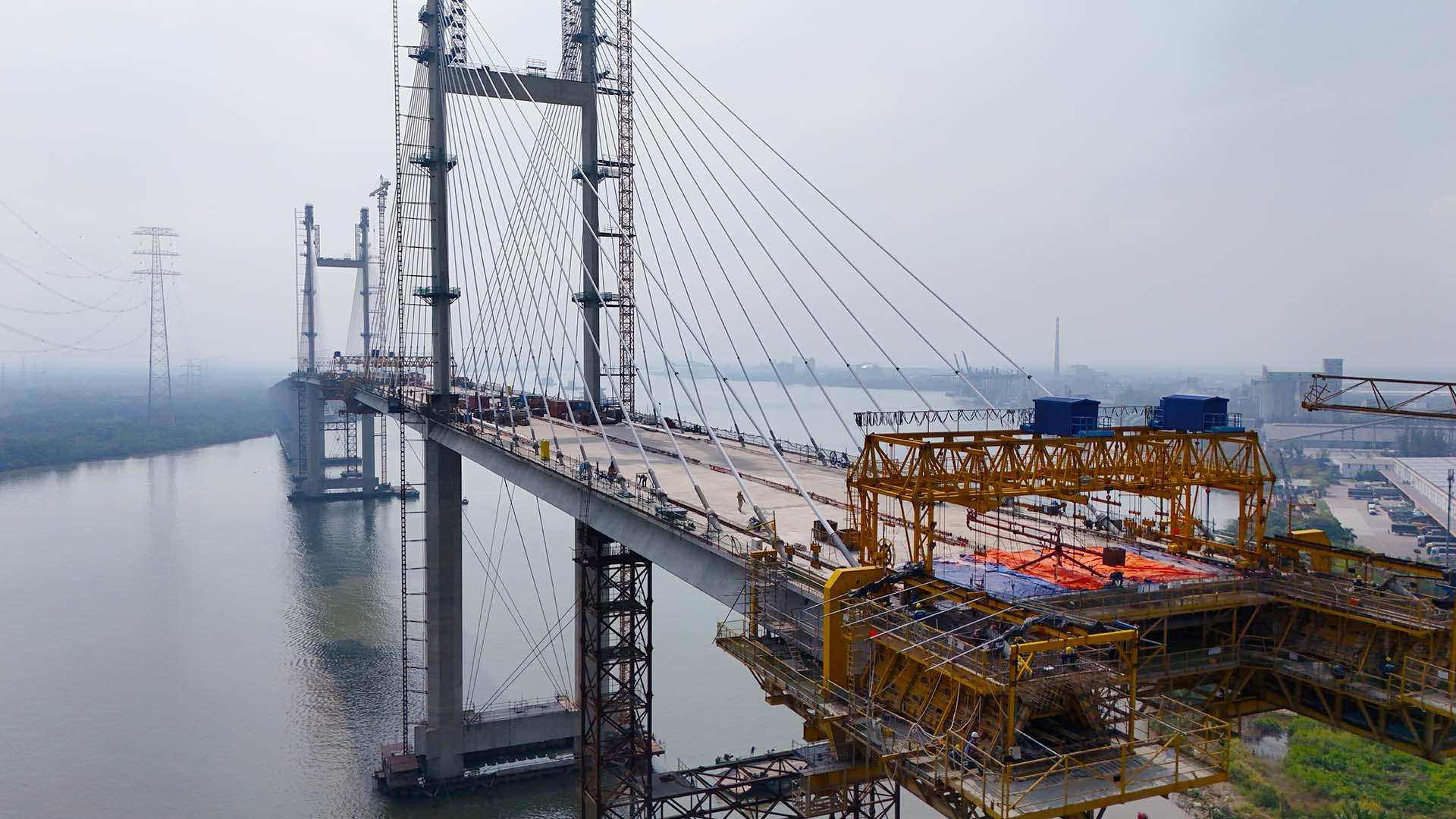
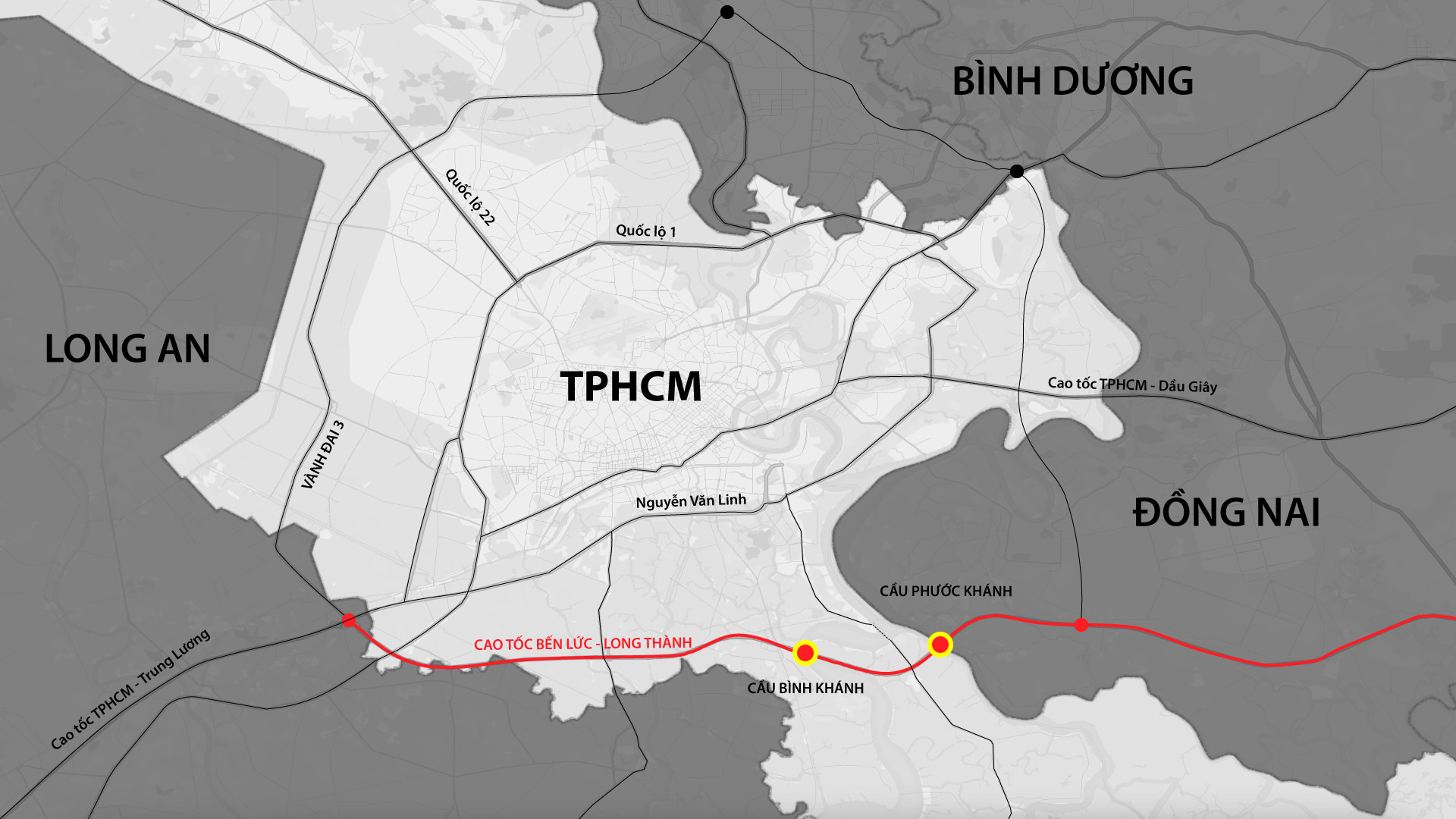
Binh Khanh Bridge is a crucial component of the Ben Luc-Long Thanh Expressway, spanning the Soai Rap River and connecting Nha Be and Can Gio districts in Ho Chi Minh City. The bridge features a cable-stayed design, with a main span of 375 meters supported by two 155-meter-high towers. Its foundation incorporates a steel pipe pile structure. With a clearance of 55 meters above the water surface, the bridge ensures smooth navigation for large-tonnage vessels.
The project commenced in August 2015 with a total investment exceeding VND 2.8 trillion. However, by December 2018, with 70% of construction completed, work came to a halt due to funding allocation issues. Subsequently, the project remained stalled due to difficulties in securing loans from international financial institutions such as the Asian Development Bank (ADB) and the Japan International Cooperation Agency (JICA). It was not until October 2023 that construction resumed, focusing on concrete pouring and cable-stay installation.
Currently, workers are accelerating cantilever casting and cable installation, with 15 out of 18 bridge segments completed. Additionally, auxiliary components, including lighting systems, guardrails, and approach roads, are being implemented in parallel to ensure timely completion.
Binh Khanh Bridge is not only a vital segment of the Ben Luc-Long Thanh Expressway but also significantly enhances the region's transportation capacity. Once operational, the bridge will shorten travel time between the Southeast region and the Mekong Delta, reduce congestion on National Highway 1A, and optimize the integration of road and waterway logistics networks.
Furthermore, by linking Nha Be and Can Gio, the bridge will replace the current ferry transport system, facilitating smoother freight movement and commuter travel. This transformation is particularly crucial for Can Gio, a district rich in marine economic resources and eco-tourism potential but historically constrained by inadequate infrastructure.
The project also has positive implications for the real estate market and investment climate. Areas along the Ben Luc-Long Thanh Expressway, particularly Nha Be, Can Gio, and Nhon Trach, are expected to experience rising land values, fostering the development of industrial zones, ports, and logistics hubs, thereby enhancing local economic competitiveness.

Upon completion of Binh Khanh Bridge, the Ben Luc-Long Thanh Expressway will serve as a strategic corridor linking the Southeast region and the Mekong Delta, driving regional industrialization, modernization, and sustainable development. According to the plan, VEC aims to open an additional 33-kilometer section of the expressway during the upcoming April 30 holiday, improving cargo transit efficiency and overall operational effectiveness.
The success of this project not only brings logistical advantages but also promotes urban planning, regional economic growth, and environmental protection. By alleviating traffic congestion and reducing carbon emissions from traditional transport methods, the project contributes to ecological sustainability.

In summary, the near completion of Binh Khanh Bridge marks a significant milestone in Vietnam’s infrastructure development. It will enhance regional connectivity, improve transportation efficiency, and create new opportunities for economic and social progress in the years to come.