

Post Date : Monday, March 24, 2025
Economic Background and the Restructuring of Ho Chi Minh City's Real Estate Market
Since early 2025, the demand for investment and transactions in Ho Chi Minh City's real estate (BĐS) market has increased significantly, reflecting the combined effects of macroeconomic policies, infrastructure development, and favorable financial conditions. Amid limited supply, declining interest rates, and an optimistic market sentiment, investors are actively leveraging this transition phase to capitalize on the next wave of growth.
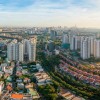
According to data from Batdongsan.com.vn, interest in real estate surged 4-6 times after the Lunar New Year 2025 compared to the same period last year, indicating a rapid recovery in market confidence. Notably, areas with rapid infrastructure development, such as Thu Duc City (TP. Thủ Đức), Thu Thiem (Thủ Thiêm), and peripheral districts with urbanization potential, have become hotspots attracting investment capital.
At the end of 2024, the Ho Chi Minh City People's Committee announced a new land price table, with significant adjustments in some central areas. In District 1 (Quận 1), land prices on Lê Lợi and Nguyễn Huệ streets increased to VND 687.2 million per square meter, while Hàm Nghi and Hàn Thuyên streets reached VND 430 million per square meter. Although still below market transaction prices, this new benchmark provides clearer market guidance, helping to mitigate transaction risks and stabilize the market.
Additionally, the land market in Thu Duc City (TP. Thủ Đức), District 2 (Quận 2), and District 9 (Quận 9) has also heated up, with land prices rising by VND 100-200 million per lot compared to the end of 2024. However, transactions remain active due to limited supply. In Thu Thiem (Thủ Thiêm), a high-end condominium project launched in early 2025 at VND 450 million per square meter quickly achieved a 100% absorption rate, highlighting the growing demand for premium real estate.
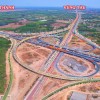
With the development of Thu Duc City, a series of major infrastructure projects are driving Ho Chi Minh City's real estate market growth. These include Metro Line 1, the Ho Chi Minh City - Long Thanh - Dau Giay Expressway, the An Phu (An Phú) interchange, Mai Chi Tho Boulevard (Mai Chí Thọ), and connecting roads such as Đỗ Xuân Hợp and Liên Phường. The construction of these infrastructures is expanding urban space and increasing land value.
Notably, emerging urban areas with a comprehensive ecosystem—including commercial centers, international schools, medical facilities, sports, and entertainment facilities—are attracting high-quality residential communities, fueling migration from the city center to well-equipped peripheral areas.
The recovery of Vietnam's economy has had a direct impact on the real estate market. In 2024, Vietnam's GDP grew by 7.09%, exports increased by 14.3%, and FDI capital reached USD 31.38 billion, providing a solid foundation for real estate investment.
In the first two months of 2025, bank deposit interest rates declined significantly, with many commercial banks reducing mid- and long-term deposit rates by 0.1-0.4%. This shift has redirected capital from savings to higher-yielding assets such as real estate. Additionally, mortgage rates are currently attractive, with some banks offering promotional rates as low as 3.88% per annum, increasing homebuyers' access to capital.
Experts predict that from Q3 2025, as infrastructure improvements, legal policy stabilization, and market confidence continue to strengthen, Ho Chi Minh City's real estate market may enter a new growth phase. Areas benefiting from urban planning, such as Thu Duc City (TP. Thủ Đức), Thu Thiem (Thủ Thiêm), Binh Chanh (Bình Chánh), and Nha Be (Nhà Bè), are expected to see continued price increases.
Furthermore, improvements in Vietnam's real estate laws will enhance market transparency, attracting more long-term investors. In this context, early investments can provide a competitive edge, allowing astute investors to seize market opportunities before property values rise further in the coming years.
Overall, Ho Chi Minh City's real estate market is in a crucial transition phase, with significant potential for appreciation and long-term returns. For investors who can seize this opportunity, this will be an advantageous moment to position themselves for the next growth cycle in the market.
-------------------------------------
FTT REAL ESTATE COMPANY LIMITED
Headquarters in Vietnam: EA4-01.01 Eratown Duc Khai, Nguyen Luong Bang, Phu My Ward, District 7
Receive consignments for buying, selling and renting apartments, updating the best prices in the market
HOTILINE: 081.299.1003
|ID Line/ Zalo: 0812991003
|ID Wechat/ Kakaotalk: FTTland88881