


Post Date : Tuesday, November 26, 2024
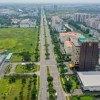
The construction began in 2016, and although most of the work has been completed, the tunnel has not been opened due to land clearance issues, particularly near the Suoi Tien Tourist Area. Currently, the tunnel is fenced off, preventing motorcycles from traveling directly through, forcing them to take a detour through a side road near the High-Tech Park and then rejoin the Hanoi Highway. This detour is over 1 km long. Meanwhile, the car lanes on the Hanoi Highway are not affected and remain operational.
According to Mr. Nguyen Thanh Nam, Deputy Director of the Ho Chi Minh City Infrastructure Investment Corporation (CII), the expansion project of the Hanoi Highway and National Route 1 was originally designed as a flat road. However, due to the increasing traffic volume, in 2016, the city decided to build tunnels on both parallel roads, along with overpasses above, to reduce traffic conflicts and congestion.
Each tunnel is approximately 1 km long and 12 meters wide, with 140 meters being an enclosed section, and the rest designed as an open tunnel. These tunnels primarily serve motorcycles and small cars, with a minimum clearance of 2.5 meters in the enclosed sections.
Mr. Nam stated that the construction has faced challenges due to land acquisition issues, particularly with the section near the Suoi Tien Tourist Area, where approximately 300 meters of the road have not been cleared. Work on the tunnel was suspended in mid-2023 due to this. He further stated that once the land is handed over, the project can be completed in 4-6 months, allowing for smoother traffic flow.
This project also faces other difficulties, especially in Binh Duong, where a 2-kilometer stretch from the New Eastern Bus Station to the Tan Van Interchange has yet to receive land clearance. This section has become a "bottleneck," severely affecting local traffic and reducing the overall effectiveness of the project.
Around 30 households in the area have yet to have their land cleared, with residents requesting higher compensation. They are also waiting for adjustments to the detailed 1/500 planning, and local authorities are working to resolve these issues swiftly to allow the project to move forward.
The expansion project covers a total length of 15.7 km, with 12 to 16 lanes, and is divided into three sections. The first section, from Saigon Bridge to Binh Thai Interchange, is 6.2 km long and 153 meters wide. The second section, from Binh Thai to Tran 2 Interchange, is 5.3 km long and 113 meters wide. The third section, from Tran 2 Interchange to Tan Van, is 4.2 km long and 113 meters wide.
The project was approved by the Ho Chi Minh City People's Committee in 2009 with an initial investment of 25.16 trillion VND, which was later adjusted to over 49 trillion VND in 2016. Currently, the main route from Saigon Bridge to the National University Interchange, covering more than 13 km, has been completed.
The tunnel construction is crucial for improving transportation efficiency in the eastern part of Ho Chi Minh City, especially to reduce congestion and enhance connectivity with Binh Duong and Dong Nai. However, the delay in the tunnel's completion has caused inconvenience for local residents and hindered the expected smooth traffic flow.
Moreover, the delay in the tunnel's completion has impacted the planned operations of the Bến Thành - Suoi Tien Metro Line. When fully operational, the metro is expected to provide an easy connection between densely populated areas such as Thu Duc, District 9, and Binh Duong. However, if the transportation infrastructure is not completed in time, the efficiency of the metro system will be diminished, negatively affecting urban transportation development.
Despite the challenges, the authorities and investors remain committed to completing the project. Mr. Nam emphasized that once the necessary land is handed over, the project could be finished in 4-6 months, providing a smoother traffic experience. This expansion not only aims to improve traffic flow but also plays a vital role in boosting economic development in the region.
As time progresses, it is hoped that the remaining issues will be resolved quickly, and the tunnel project, along with the Hanoi Highway expansion, will provide an efficient and modern transportation network that enhances the connectivity of Ho Chi Minh City and surrounding areas. This will ultimately contribute to the region's economic growth and the well-being of its residents.