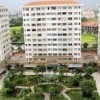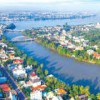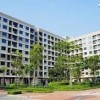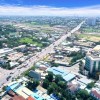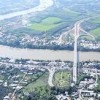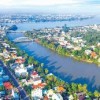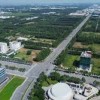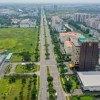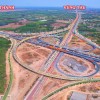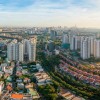




Real estate in the central area of Ho Chi Minh City, July 2025. Photo: Quynh Tran
The industry and environment sector includes large-scale wastewater treatment plants such as Tham Luong – Ben Cat, South Saigon, and North Saigon, along with industrial parks and clusters like VSIP 5 (1,000 ha), Bo La, An Lap, and Dat Do. Meanwhile, transport infrastructure features several major capital-intensive projects, including Railway Line No. 3 connecting Vung Tau – Ba Ria – Phu My (VND 127,645 billion), Urban Railway Line No. 1 Ben Thanh – An Ha (VND 86,521 billion), and Ring Road 4 (VND 14,083 billion).
The housing and urban development sector includes many large-scale projects such as Binh My Urban Area (586 ha), Tan Uyen Urban Area (299 ha, with an estimated investment of VND 33,822 billion), along with projects along Ring Road 3, Ring Road 4, and various social housing and mixed-use apartment developments.
The trade, services, and tourism sector focuses on developing resorts, high-end hotels, shopping centers, and eco-tourism areas such as Tha La Peninsula, hotel complexes in Thu Thiem New Urban Area, and commercial-service complexes in central Ho Chi Minh City connected to major transport corridors and metro lines.
In terms of scale, projects range from a few thousand square meters to thousands of hectares. Some large industrial and urban zones such as Phu Giao 4 span up to 1,000 ha, while industrial clusters typically range from 30–75 ha, and healthcare and education projects usually range from 1.5–4 ha. Total investment per project varies from several hundred billion to tens of trillions of VND.
The Ho Chi Minh City People’s Committee has assigned the Department of Finance to lead in guiding and supporting investors, updating the project list, and publicly disclosing it on official portals to promote investment. Relevant agencies may propose adjustments or additions during implementation.
According to the city’s February socio-economic report, the economy has shown many positive signals, with multiple indicators posting strong year-on-year growth. The Industrial Production Index (IIP) is estimated to increase by 14.6%, while total retail sales of goods and consumer service revenue rose by over 13%. The tourism sector generated more than VND 125,000 billion in revenue, welcoming over 14.1 million visitors.
The city targets an average GRDP growth rate of 10–11% per year, with per capita income expected to reach approximately USD 14,000–15,000 by 2030. To achieve double-digit growth, Ho Chi Minh City estimates an annual investment capital requirement of around VND 1.2 quadrillion.
(Phuong Uyen)