


Post Date : Wednesday, July 03, 2024
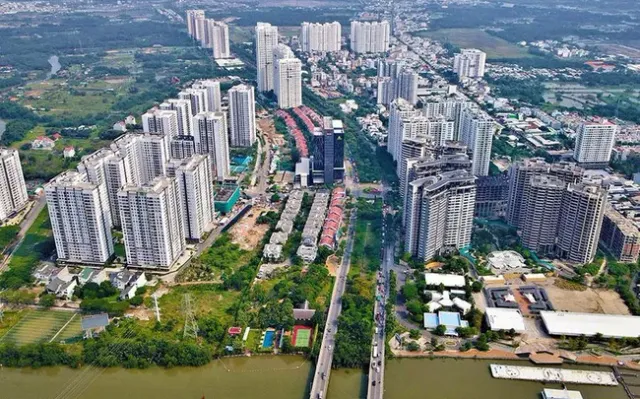
Real Estate Market in Ho Chi Minh City is Heating Up Again
By 2024, the real estate business in Ho Chi Minh City has returned to positive growth, increasing from 2.51% in Q1 to 2.94% in Q2/2024.
According to the Ho Chi Minh City Statistics Office, the revenue from real estate business in the first six months of 2024 is estimated to reach VND 123,887 billion, up 6.1% compared to the same period last year.
Thus, by 2024, the industry has returned to positive growth, recovering from a negative 6.4% in 2023 to an increase of 2.5% in Q1 and nearly 3% in Q2. Although it remains the slowest-growing sector among the city's nine key service industries, it has shown higher growth each quarter.
"The real estate market has moved past its slump as relevant policies have been effective, lending rates have decreased, and access to capital for both individuals and businesses has improved," stated the Ho Chi Minh City Statistics Office.
Despite no new real estate projects being announced by the Department of Construction as eligible for future house sales in the first half of the year, several new projects have been approved for investment. Additionally, some projects have resumed after previous issues were resolved.
![]()
Regarding the issuance of house ownership and land use certificates, the city has issued 3,396 new certificates in the first six months of 2024 (3,391 certificates to individuals and 5 to organizations) and registered 178,680 certificate transactions for organizations and individuals in the city (2,736 certificates for organizations and 175,944 for individuals).
According to the State Bank of Vietnam's Ho Chi Minh City branch, real estate credit in the city has maintained positive growth over the past three months. Credit growth was 0.96% in March, 1.15% in April, and 1.15% in May, reaching a total debt of VND 992.8 trillion, accounting for 28% of the city's total credit debt and increasing by 2.78% compared to the end of 2023, higher than the overall credit growth in the city.
Regarding housing credit, a representative from the State Bank of Vietnam's Ho Chi Minh City branch stated that loans for the purpose of buying houses for self-use still hold the highest proportion, accounting for 67.78% of the total real estate credit in the city. This segment has shown positive signs, with housing credit growth returning, increasing by 1.2% compared to April 2024 (after previously negative growth in earlier months).
"This segment holds a significant proportion, so its growth not only boosts overall real estate credit but also has substantial social implications, meeting the housing needs of residents and positively impacting the real estate market and economic growth," the State Bank of Vietnam's Ho Chi Minh City branch evaluated.
In the context of low capital absorption in the economy, the growth of the real estate market will have positive effects and a ripple effect on other sectors, including banking credit activities. Recent changes in the real estate market and the growth of real estate credit reflect these factors and indicate growth trends in the coming time.
According to the Ho Chi Minh City Real Estate Association (HoREA), the market hit rock bottom in Q1 last year, with a negative growth rate of 16.2%. Challenges such as a lack of new supply, the dominance of high-end housing (accounting for 70-80%), high house prices beyond the financial reach of most people, and the absence of affordable housing and social housing have been prevalent.
After Q1 2023, HoREA noted that while challenges remain, difficulties have gradually lessened, and the recovery trend is clearer. The association also forecasts that the real estate market "has the potential to recover and grow again from the second half of 2024."