



Post Date : Saturday, July 13, 2024
Rising Sea Freight Costs: Businesses "Exploring" Nearby Markets
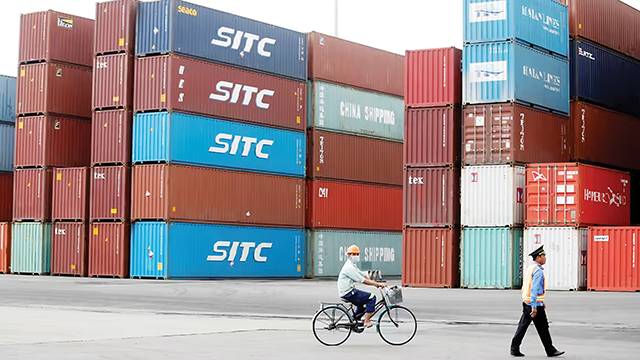
Sea freight rates have increased by an average of about 30% in recent weeks and are expected to continue rising. This situation puts significant pressure on storage facilities with high inventory levels and causes manufacturing units to worry.
According to the Independent Maritime Research Center Drewry, which specializes in providing information about the maritime market and container shipping rates, container shipping rates from Asia to Europe and the United States have seen the largest increases. However, the rates for routes from America and Europe to Asia and intra-Asian routes have not fluctuated much. In this context, Vietnamese businesses believe that it is essential to strengthen the search for new export markets to reduce dependence on certain specific markets.

EXPORT PRESSURE WITH SEA FREIGHT
Mr. Dang Dinh Long, General Director of Mega A Logistics Company (Ho Chi Minh City), stated that the shipping situation to Vietnam's key export markets is very tense, especially the route to Europe, where freight rates are both high and spaces are scarce. He added that previously, Vietnamese businesses mainly exported FOB (Free on Board) and imported CIF (Cost, Insurance, and Freight), so they paid little attention to freight rates because it was the partner's responsibility. However, now Vietnamese businesses have switched to exporting CIF, so the recent changes in freight rates have had a significant impact.
Mr. Nguyen Minh Nhat, Director of Nhat Nam Plywood and Construction Machinery Co., Ltd. (Ben Cat, Binh Duong), shared that the wood industry is recovering well, but since May 2024, sea freight rates have continuously increased, causing many businesses to worry. For the time being, businesses are not considering price increases but are accepting reduced profits to cover costs and retain customers while increasing supply. In the long term, businesses are also approaching more nearby markets such as ASEAN countries.
The textile and footwear industries, which export 70-80% of their production, are heavily dependent on sea freight rates and are vulnerable to global market fluctuations. Since the end of the first quarter of this year, Dony Garment Company (Ho Chi Minh City) has shifted its focus to Southeast Asian markets such as Singapore, Indonesia, Malaysia, and Cambodia. Mr. Pham Quang Anh, Director of Dony, commented: "These markets are highly competitive but have logistical advantages. The cost and time of transportation are very suitable, and in some places, even cheaper than domestic transport. This is a reasonable choice in the current context."
AGRICULTURAL ENTERPRISES AND RISING FREIGHT COSTS
Mr. Nguyen Van Thu, Chairman of the Board of Directors of G.C Food Joint Stock Company (Binh Thanh, Ho Chi Minh City), suggested that if the company has to bear the cost of export orders, it must accept the increased freight rates if price negotiations with customers have not been concluded. Additionally, the business has not mentioned price increases but has accepted reduced profits to cover freight costs, ensuring smooth operations and maintaining orders. G.C Food is also reaching out to more nearby markets in the region to promote exports.
Due to the seasonal nature of goods, agricultural enterprises usually sign short-term contracts, making them susceptible to the impacts of rising freight rates. Vo Thanh Chau, Director of Thanh Tuoi Import and Export Company (Binh Chanh, Ho Chi Minh City), expressed concern: "When freight rates rise too high, we are forced to choose longer routes. However, products like fresh fruit and agricultural produce can spoil easily, causing significant losses for businesses." To avoid losses, Thanh Tuoi Company has had to temporarily suspend exports to markets with excessively high freight rates.
In Ba Ria - Vung Tau province, many businesses have quickly and flexibly sought new markets, focusing on nearby markets such as ASEAN, China, South Korea, and Japan. This has helped the province's exports gradually recover and show positive growth in the first six months of the year. Mai Thi Nhan, Director of Ngoc Tung Company, acknowledged that these difficulties have somewhat impacted the company's operations. "Currently, the company is shifting to retail.