


Post Date : Wednesday, May 20, 2026
In the coming period, large-scale mega urban developments will continue to be the arena for enterprises with strong financial capabilities. Meanwhile, medium-sized companies will take a different path, focusing on moderately sized projects that better meet the real housing needs of the population.
![]() |
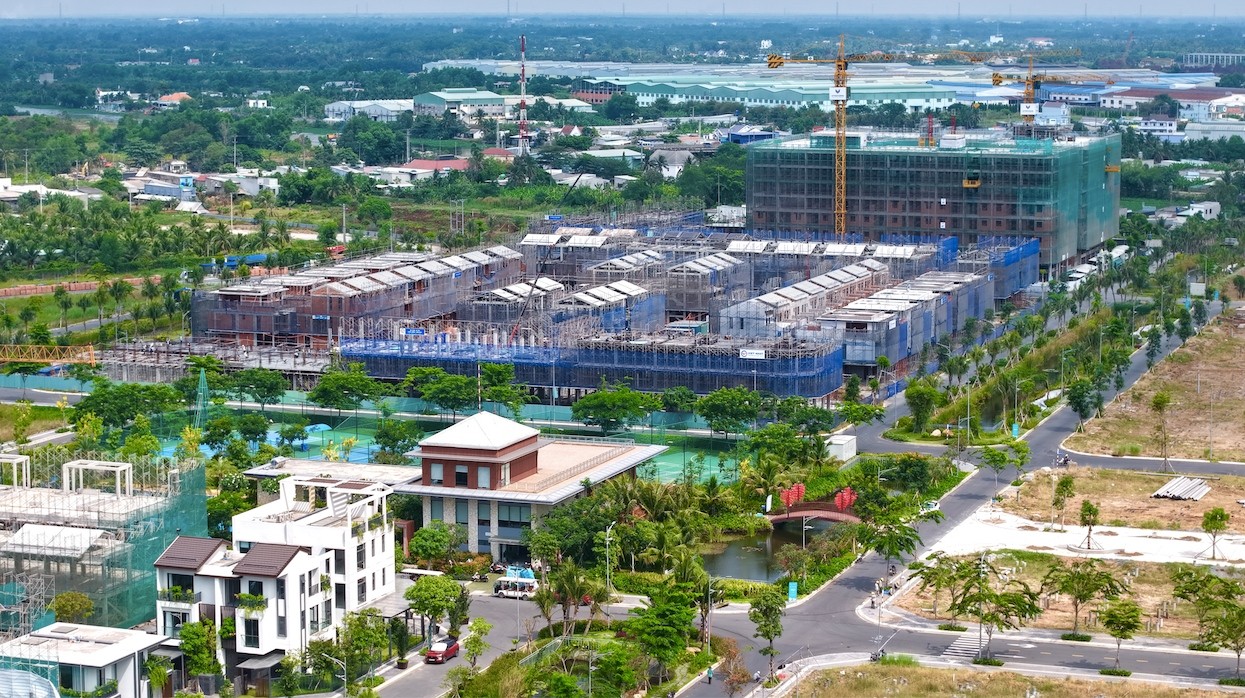
| Suburban mega-urban developments are becoming a promising destination for investors. In the image: A corner of the LA Home urban area. Photo: Kỳ Phương. |
According to Mr. Ngô Quang Phúc, CEO of Phú Đông Real Estate JSC, the strong development of transportation infrastructure is creating significant opportunities for affordable housing, especially in suburban areas around Ho Chi Minh City.
Population decentralization toward the eastern, western, and northern areas of Ho Chi Minh City is becoming increasingly evident thanks to improved transport networks. This has significantly reduced commuting time and changed the previous perception that “living far from the center is inconvenient.”
Mr. Phúc noted that the first major challenge in real estate development is land acquisition. To develop affordable housing, businesses are forced to move to suburban areas, as there are almost no opportunities left to secure reasonably priced land in central locations.
Although suburban land is still available, it is not easy to find plots that meet planning requirements, are reasonably priced, and suitable for development. Many developers even search for land plots of 5,000–7,000 m² to build projects of around 700–1,000 apartments.
In addition to land availability, legal procedures also limit supply. Although affordable housing is encouraged, the approval process is similar to other segments and often takes even longer.
The legal completion of a project typically takes 3–5 years, which is one of the reasons for the shortage of supply. Moreover, low profit margins also make developers less interested in this segment.
At the same time, the growing preference for apartment living among young people is creating more room for development. However, developers must not only compete on price but also focus on living quality, amenities, and post-handover operations.
An attractive urban area must have convenient transport connections, full amenities, transparent legal status, and effective operation management after residents move in. In the coming period, real estate companies will need to focus more on product quality and real-life living experiences rather than just sales incentives.
Mr. Phúc affirmed that large-scale mega urban areas will continue to be the playground of financially strong enterprises, while medium-sized developers such as Phú Đông will focus on moderately sized projects that meet real housing demand.
Demand in this segment is very large, and projects that match market needs are often sold out quickly. However, the paradox is high demand but limited supply.
Eco mega cities will be the future trend
Ms. Trần Diễm My, Vice Chairwoman of Five Star Group, stated that for real estate businesses, staying updated with market trends and policy changes is crucial. Companies must proactively adapt strategies for sustainable development and contribute more value to society.
She noted that with continuously expanding highways, ring roads, and transport links, traveling from suburban urban areas to central Ho Chi Minh City or districts such as District 7 (former) and District 12 (former) has become much more convenient.
Notably, eco mega urban models will continue to be a suitable trend in the new market phase, especially as homebuyers increasingly prioritize quality of life, green space, and synchronized amenities.
In the current market context, developers can no longer spread land holdings as before. When the market faces difficulties, financial pressure and cash flow risks become major challenges for companies with multiple large-scale projects.
Source: Kỳ Phương