

Post Date : Monday, March 24, 2025
Ho Chi Minh City (HCMC) is implementing an urban development strategy based on the Transit-Oriented Development (TOD) model, focusing on 11 areas along Metro Line 1, Metro Line 2, and Ring Road 3. This approach not only optimizes land use but also contributes to urban renewal, economic growth, and improved quality of life through an efficient public transportation system.
The TOD model is centered around increasing population density and land use intensity around public transit hubs, forming vibrant urban centers. This trend is widely adopted in developed countries such as Japan, South Korea, and Singapore, and in Vietnam, HCMC is leading the way in testing and implementing this model. TOD not only enhances urban land use efficiency but also reshapes the city’s development in a sustainable manner, limiting uncontrolled urban sprawl and reducing pressure on existing transportation infrastructure.
From now until 2025, HCMC plans to develop nine TOD areas along metro lines and Ring Road 3:
Tân Phú District: Lot I/8A, Tây Thạnh (26 ha) – Metro Line 2.
Tân Bình District: Exhibition and sports center (5 ha) – Metro Lines 2 & 5.
Tân Bình & District 10: C300 area (41 ha) – Metro Lines 2 & 5.
Thủ Đức City: Phước Long Station (160 ha) – Metro Line 1.
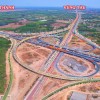
Thủ Đức City: Coconut farm area (152 ha) – Ring Road 3.
Thủ Đức City: Nhatico factory site, Long Bình Ward (29 ha) – Ring Road 3.
Hóc Môn District: Area 8, Tân Hiệp (198 ha) – Ring Road 3.
Hóc Môn District: Area 6, Xuân Thới Thượng (389 ha) – Ring Road 3.
Hóc Môn District: 104 ha area in Xuân Thới Thượng – Ring Road 3.
After 2026, the city aims to expand TOD development in Tân Hiệp Commune (Hóc Môn District) and Tân Kiên Station (Bình Chánh District), connecting to the HCMC–Cần Thơ railway and other regional transport corridors. These areas will play a crucial role in creating satellite urban clusters, helping to ease pressure on HCMC’s central districts while promoting synchronized development between transport infrastructure and urban spaces.
Based on land availability and development potential, HCMC classifies TOD areas into two main categories:
New Development Areas: Includes vacant land, low-density residential zones, or industrial sites that require relocation, allowing for faster land clearance and new urban construction.
Urban Renewal Areas: Consists of already urbanized but degraded areas that require redevelopment and infrastructure upgrades to align with TOD’s compact city model.
TOD areas will be developed with diverse land uses, including mixed-use urban zones, commercial and service centers, public spaces, and multi-level transport systems to optimize connectivity and encourage public transport use. Additionally, green features such as parks, ecological corridors, and pedestrian-friendly zones will be integrated to create a sustainable living environment, mitigating the negative impacts of rapid urbanization.
The TOD model will not only reduce traffic congestion but also increase real estate value, attract investment, create jobs, and boost the urban economy. Furthermore, it will contribute to reducing greenhouse gas emissions, optimizing energy consumption, and building a green, sustainable urban ecosystem. Once these TOD areas become operational, public transport will become the primary driver of urban development, further limiting private vehicle use and easing pressure on existing infrastructure.
According to the schedule:
Metro Line 1: Expected to begin operation by the end of 2024.
Metro Line 2: Expected to start construction in 2025 and be completed by 2030.
Ring Road 3: Planned for completion in 2026.
HCMC aims to complete planning, select investors, and approve projects by 2025, while conducting detailed studies on environmental impacts, transport infrastructure, and financial models to ensure feasibility.
In the future, the success of these TOD areas will set a foundation for expanding the model to other cities nationwide, shaping smart, modern, and sustainable urban development. However, for optimal results, TOD implementation requires close coordination among local authorities, investors, and residents to balance economic growth with environmental protection.
While TOD brings numerous benefits, its implementation faces several challenges:
Land acquisition and relocation: Moving residents and businesses within planned areas may face resistance if compensation policies are not satisfactory.
Investment capital: TOD requires both public and private sector participation, necessitating appropriate financial incentives.
Infrastructure integration: Ensuring synchronization between public transportation and urban amenities to maximize TOD effectiveness.
To overcome these challenges, HCMC must adopt flexible policies, improve urban management processes, and enhance stakeholder participation, ultimately creating a highly efficient, livable, and sustainable compact urban system.
-------------------------------------
FTT REAL ESTATE COMPANY LIMITED
Headquarters in Vietnam: EA4-01.01 Eratown Duc Khai, Nguyen Luong Bang, Phu My Ward, District 7
Receive consignments for buying, selling and renting apartments, updating the best prices in the market
HOTILINE: 081.299.1003
|ID Line/ Zalo: 0812991003
|ID Wechat/ Kakaotalk: FTTland88881