

: Era Town, Nguyen Luong Bang,Phu My Ward, District 7, Ho Chi Minh City
028 66843500
+886 956918888
hotline
028 66843500 +886 956918888

Vietnam Real Estate: A Phase of Restructuring and Deep Segmentation

Post Date : Monday, May 04, 2026

After a prolonged period of strong growth, Vietnam’s real estate market is entering a correction phase. Fluctuations in credit policies and investor sentiment are contributing to a restructuring of the market, moving it toward greater sustainability and transparency.

The market is influenced by multiple factors

According to a report from the Ministry of Construction, the real estate market in the coming period will continue to be affected by various factors such as interest rates, capital costs, global economic fluctuations, as well as increasingly higher requirements for urban planning, housing standards, and green urban development. This requires regulators to implement flexible policies, balancing growth objectives with risk control.

The Ministry of Construction forecasts that in 2026, the market will operate in a state of “cautious activity”; the apartment and housing segments serving real housing demand will continue to play a leading role. Buyers and investors are increasingly prioritizing projects with clear legal status, synchronized infrastructure, and real usage value, rather than chasing short-term price appreciation expectations.

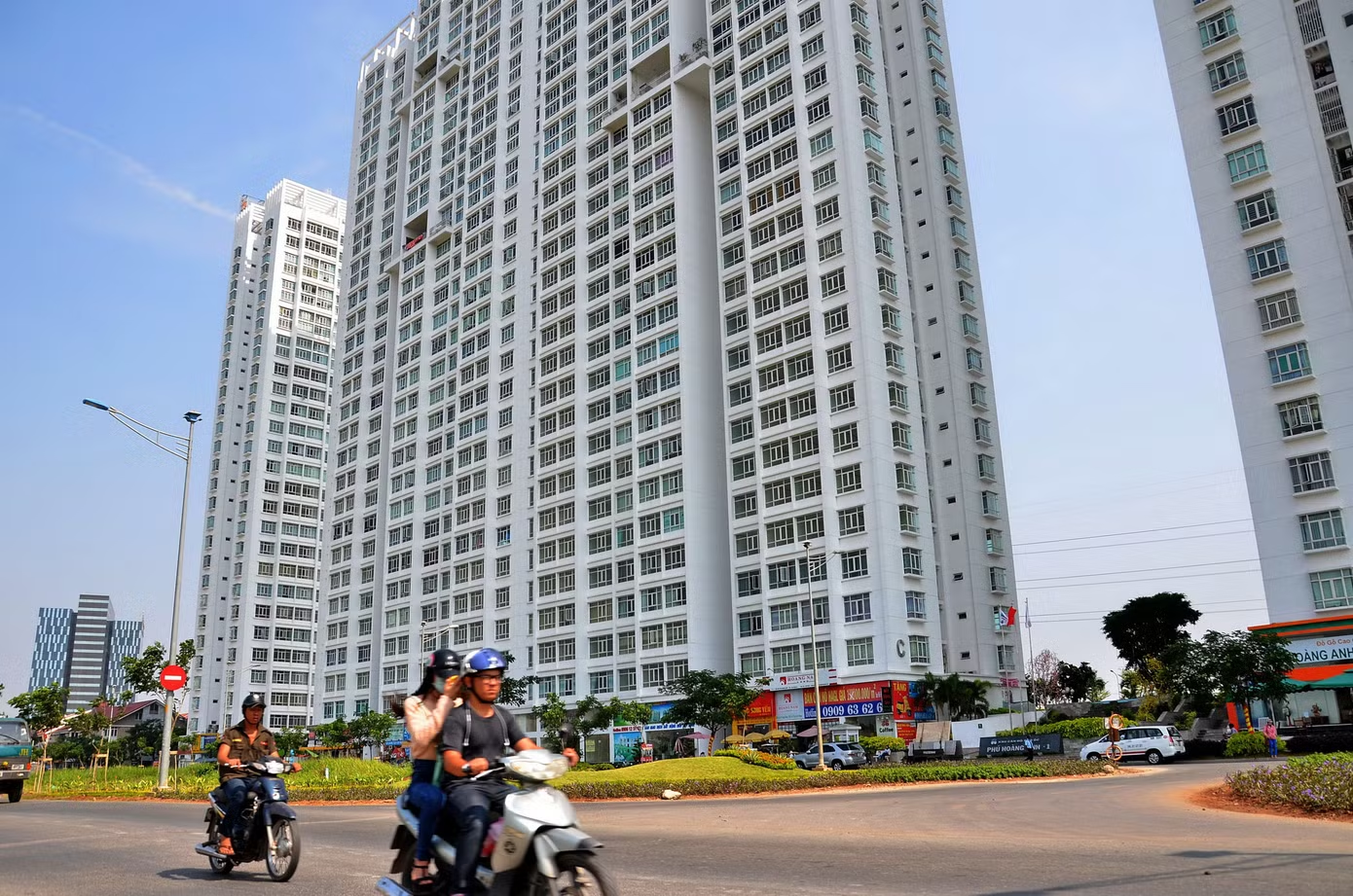
Thị trường bất động sản bước vào chu kỳ điều chỉnh- Ảnh 1.

Real estate market enters a cleansing phase

The Savills Q1/2026 report shows that the market is entering a large-scale restructuring phase. In Hanoi, the trend toward polycentric development is becoming increasingly clear, with a stronger focus on quality of life and resident experience. Meanwhile, Ho Chi Minh City continues to face limited supply, while demand has shown signs of selective recovery.

A notable point is the change in buyer behavior. According to Ms. Đỗ Thu Hằng, Senior Director of Advisory & Research at Savills Hanoi, buyers are now more cautious, prioritizing properties that can be used immediately or generate stable long-term cash flow. The shift toward satellite areas is also increasing as central property prices remain high. This reflects a fundamental shift from speculative “flipping” mindset to value-based investment.

She noted that the market is entering a strong cleansing phase. Access to capital from banks and investment funds is becoming increasingly stringent, prioritizing only highly feasible projects that meet real demand.

Clear market differentiation

According to Nguyễn Văn Đính, Vice Chairman of the Vietnam Real Estate Association, Q1/2026 recorded several positive signals as the legal framework continues to improve, helping resolve existing bottlenecks and enabling new supply. However, the market is undergoing its strongest filtering phase in many years.

This process is driven not only by internal market factors but also by external influences such as exchange rates, inflation, and global geopolitical instability, creating a comprehensive “stress test” for real estate businesses.

On a positive note, this filtering process is helping reshape the market toward greater safety and sustainability. The market is currently operating in a “dual state”: under macro pressure while simultaneously self-adjusting through internal restructuring.

In terms of supply, Ms. Phạm Thị Miền, Deputy Director of the Vietnam Real Estate Market Research Institute, stated that in Q1/2026, the market recorded around 52,000 commercial housing units launched, of which about 38,000 were new supply. Although slightly lower than the previous quarter, this figure is still 2.5 times higher than the same period in 2025.

Notably, the supply structure is shifting toward a polycentric model, becoming more evenly distributed across regions and expanding into suburban areas and new urban zones. It is increasingly associated with large-scale developments, transit-oriented development (TOD), and green standards.

On the demand side, buyer sentiment has clearly changed. In a context of high capital costs and incomplete liquidity recovery, buyers are now in a “fear of making the wrong choice” mindset. As a result, selection criteria have become stricter, with top priorities being legal transparency, cash flow potential, and sustainable long-term appreciation.

Ngọc Mai


Thank you for rating
0 0

Free Consultation Update the latest information
Enter your information to receive our advice
capcha
capcha
News Update the latest information
Ho Chi Minh City Faces a Shortage of Affordable Rental Housing
Dong Nai is making a strong breakthrough, emerging as a new urban hub.
2026 社會住宅「大浪潮」:數萬戶新住宅同步啟動建設
When Infrastructure Meets Incentive Policies: Where Is the New Focus of Capital Flow?
Billion-Dollar Infrastructure Takes Shape, Positioning Dong Nai as a New Investment Hotspot!
Dong Nai Transforms Rapidly as Investors Rush to Capitalize on Infrastructure Growth Opportunities!
More Than $1 Billion Flows into the North of Ring Road 4 – Is a New Growth Hub Taking Shape?
Enhancing Land-Use Efficiency: Ho Chi Minh City Reclaims Project Land in the High-Tech Park
Infrastructure Breakthrough: Direct Connection Between Ho Chi Minh City and Vung Tau via the New Expressway
Vietnam Strengthens Its Position on the APAC Economic Map, Creating Major Opportunities for the Real Estate Market.
Video clip Update the latest information