

Post Date : Friday, February 28, 2025
The current economic and social landscape is profoundly impacting Vietnam's residential real estate market, leading to strategic shifts in supply-demand dynamics and development models. Living spaces are no longer merely shelters but are evolving into ecosystems that meet health, convenience, and sustainability demands. This trend is manifested through the rise of wellness real estate, energy real estate, and smart housing.
According to the Meet The Expert forum by Savills in October 2024, the wellness real estate segment is projected to reach $180 billion in 2025, accounting for 1.5% of the total global construction market. This type of real estate not only provides residential functions but also enhances quality of life through green designs, healthcare facilities, and energy restoration spaces.
The core elements of wellness real estate include open architecture with expansive natural spaces, air filtration systems, optimized natural lighting, wellness-oriented amenities, and solutions to minimize environmental pollution.
The concept of energy real estate is redefining the interaction between humans and their living environments. According to Chu Lê Trung, Marketing and Business Director of EDGE, this type of real estate integrates natural value (location, ecology, and feng shui) with constructed value (planning, design, building materials, and amenities) to create spaces that restore energy and enhance residents' physical and mental well-being.
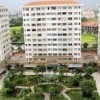
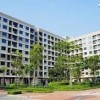
An exemplary project of this real estate model is Hanoi Tropical Garden in Hòa Lạc, which maintains a construction density of only 28%, harmonizing natural landscapes with optimized architectural experiences to achieve sustainable green living.
Advancements in artificial intelligence (AI) and the Internet of Things (IoT) are driving innovations in residential real estate. Smart homes not only optimize energy usage but also enhance convenience and security through automation systems.
Key features of smart housing include voice-controlled or mobile-operated functionalities, automated energy management, advanced security systems, and integrated smart ecosystems. This trend is expected to become the new standard in the mid-to-high-end real estate market.
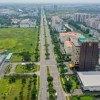
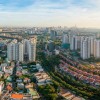
Since the COVID-19 pandemic, the trend of moving away from major cities or relocating to satellite cities has accelerated. Locations such as Hòa Lạc (Hanoi), Nhơn Trạch (Đồng Nai), and Củ Chi (Ho Chi Minh City) have become market hotspots due to infrastructure development and strategic urban planning.
Eco-cities, integrated resort-residences, and suburban developments are emerging as attractive alternatives, offering spacious living environments and high-quality lifestyles while maintaining connectivity with urban centers. This trend particularly appeals to remote workers and those seeking work-life balance.
New legal policies, effective from August 1, 2024, are set to enhance transparency and liquidity in the real estate market. Adjustments in planning, ownership, and asset management provide a strong foundation for market growth in 2025-2026.
Experts predict that this period will witness a transition from traditional real estate to multi-value integrated real estate, with stricter standards on infrastructure, living environments, and technological applications.
Economic shifts, technological advancements, and changing consumer behaviors are reshaping Vietnam's residential real estate market. In this context, wellness real estate, energy real estate, and smart housing are not just temporary trends but are gradually becoming new industry standards, reflecting a sustainable development direction for the market.